Visual index
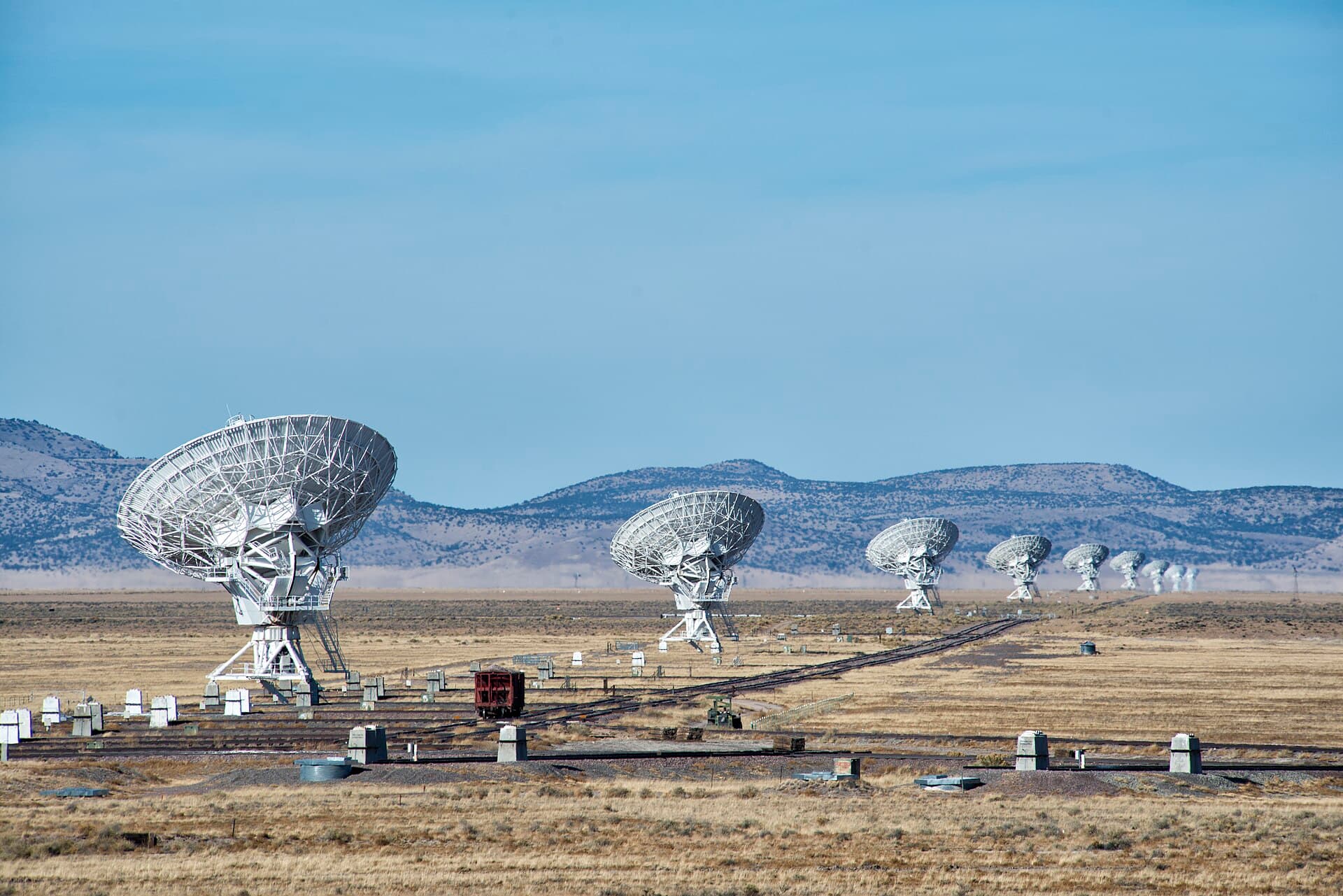
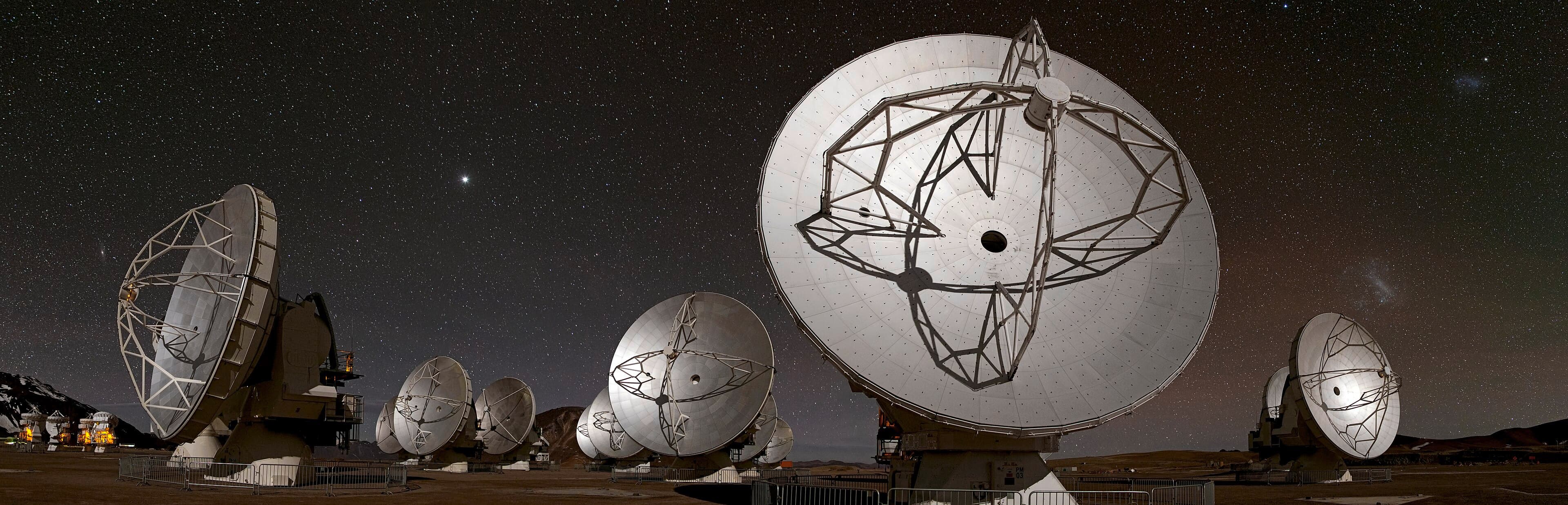
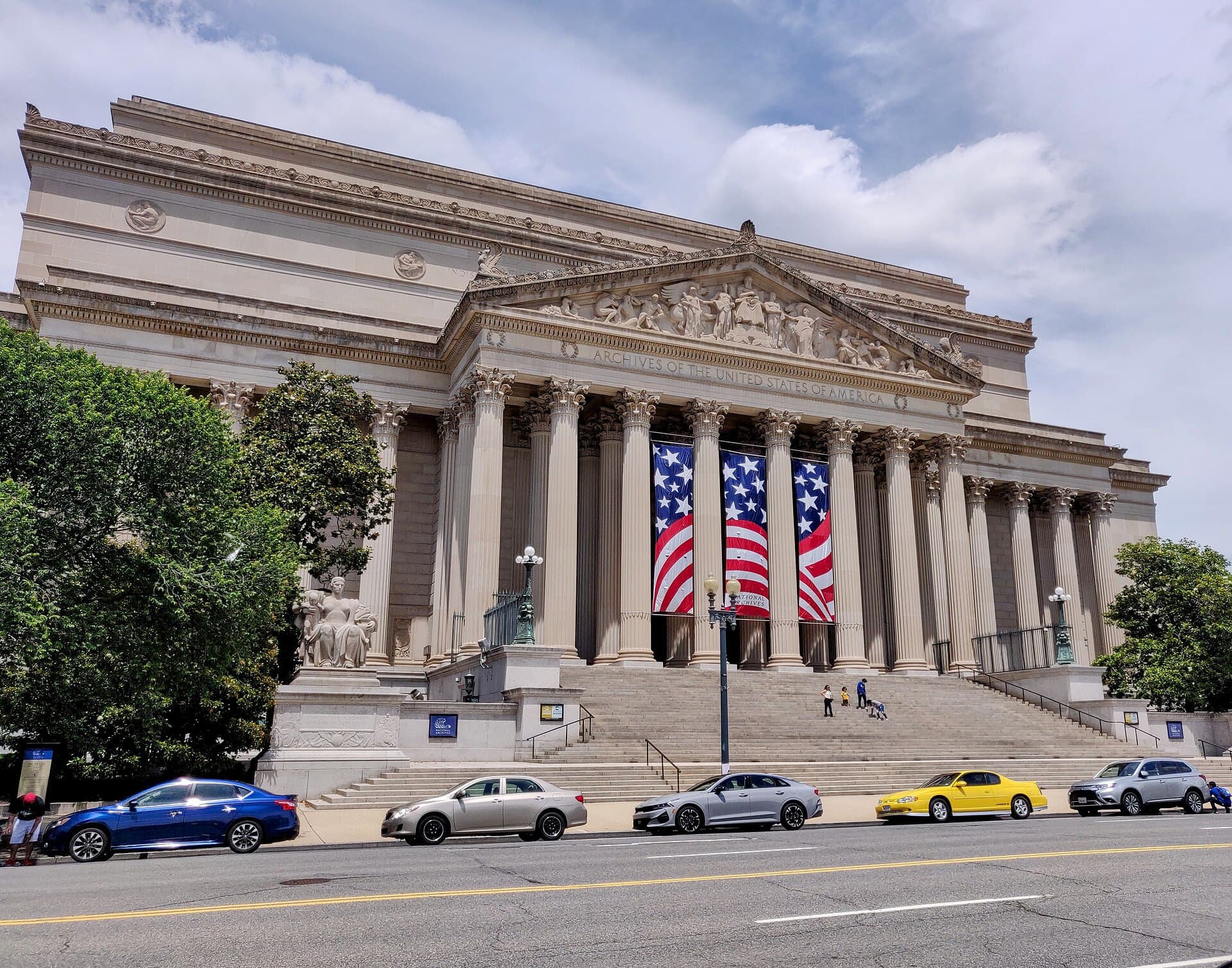
Category lanes now surface as visual corridors.
The library stays source-first, but each lane now carries immediate visual orientation so users can scan themes before opening individual dossiers.

Paradi // Deep Space Interface
Synchronizing deep-space research lanes...
Paradi
Exo-Intelligence Atlas
Paradi / Library
A searchable index of dossier pages covering official records, archives, imagery cases, life-search science, SETI infrastructure, contact protocols, and evidence methods.

Master index
This index is data-driven and statically generated. Every dossier page below is built from the same research model, so the system can keep expanding without changing the route structure.
Visual index
The library stays source-first, but each lane now carries immediate visual orientation so users can scan themes before opening individual dossiers.
Library Constellation Field
Interactive 3D clustering of sources, case classes, and protocol lanes across the full dossier corpus.
Filter by category
Showing 124 of 124 dossiers
2024
No public proof of extraterrestrial beings, activity, or technology
The strongest current official baseline. AARO says it has not discovered evidence that any reviewed case proves alien visitation or alien technology on Earth.
2023
A transition report focused on intake, declassification, and case throughput
The 2023 report shows AARO moving from startup posture toward a process-driven case office with more formal reporting and declassification handling.
2024
Historical review does not validate claims of secret alien recovery programs
Volume I reviews the historical U.S. government record that feeds many popular reverse-engineering stories and says the available evidence does not support those public claims.
2025
Transparency depends on original data owners, not just on AARO
The 2025 declassification paper explains why many public demands for instant disclosure collide with classification ownership, security review, and interagency redaction rules.
2023
Data quality is the real bottleneck
NASA’s study does not confirm alien explanations. Its central argument is that better sensors, metadata, and open scientific workflows are needed before stronger claims can be made.
2021
Unexplained does not equal extraterrestrial
The 2021 ODNI assessment put modern UAP into the national-security mainstream while also stopping well short of any alien conclusion.
2022
The case volume rose, but the proof standard did not collapse
The 2022 ODNI report widened the reporting window and showed how quickly the UAP inventory could grow once stigma eased and collection channels improved.
2023
A bridge between intelligence reporting and AARO operations
The 2023 consolidated report shows how the reporting pipeline shifted toward AARO while ODNI and DoD still shared the public reporting burden.
2020
The videos are authentic military videos, not proof of alien craft
The 2020 DoD release settled one narrow question: the three famous clips were genuine Navy videos. It did not settle what the objects were.
1947-1969
A major archival corpus, not a hidden proof bundle
Blue Book remains historically important because it preserves how the U.S. Air Force investigated UFO reports for decades. The archive is a research trove, not a final extraterrestrial verdict.
1994
An official Air Force attempt to close one of the most famous claims
The Roswell report represents the official U.S. Air Force explanation for the 1947 incident and argues the debris matched a classified balloon-based project rather than alien wreckage.
2022
Congress normalized public discussion of UAP as a policy and oversight issue
The 2022 House hearing was the first public congressional UAP hearing in decades and framed the topic in terms of airspace safety, reporting culture, and intelligence oversight.
2023
Witness testimony went mainstream; proof still did not
The July 2023 Oversight hearing amplified pilot testimony, whistleblower claims, and public frustration with secrecy. It also widened the gap between firsthand accounts and verifiable public evidence.
2024
Another transparency hearing, still centered on argument rather than decisive new proof
The November 2024 hearing gathered former officials and commentators to argue for more disclosure and to contest the government’s public handling of UAP information.
2023
A procedural oversight view of AARO rather than a disclosure spectacle
The Senate Armed Services hearing is less theatrical than the viral House events and more useful for understanding AARO’s mission, budget, and operating assumptions.
2024
An oversight checkpoint after the 2024 reporting cycle
The 2024 Senate hearing captures how AARO presented its activities and priorities after a fuller year of public case management and annual reporting.
2026
A useful map of public-facing AARO products
This hub is not a single document. It is a directory of reports, briefings, presentations, and hearings that helps researchers reconstruct AARO’s public communication trail.
2026
FOIA releases reveal process, disputes, and institutional friction
The reading room is a high-signal place to study what outside requesters are actually asking for and what AARO can or cannot publicly release.
2025
Archival navigation matters because myths travel faster than finding aids
The National Archives record-group guide shows where UAP- and UFO-related material actually lives in the federal archival system.
2026
Britain’s archive is essential for Rendlesham-era and Ministry of Defence context
The UK National Archives maintain a public-facing UFO files resource that supports cross-national comparisons between U.S. and British archival practice.
2023
Useful for hearing NASA’s framing in its own words
The NASA briefing is the best companion piece to the written report because it makes the agency’s caution and priorities audible rather than inferred.
2024
Physical object on infrared video; unresolved, but behavior unremarkable
AARO says the footage depicts a real physical object, yet its morphology and motion do not justify a stronger claim.
2024
Cell-phone footage; insufficient for determination
AARO says the available video from a commercially available phone is too thin to support a confident conclusion.
2023
Resolved as birds
AARO says the infrared footage is almost certainly birds and points to wingbeat-like behavior and formation dynamics.
2022
Physical object; unresolved, with unremarkable characteristics
AARO again describes a physical object but not one showing the sort of behavior that would force an exotic hypothesis.
2022
Physical object; unresolved, unremarkable
The footage appears to contain a real object, but the public summary gives no performance details that would justify dramatic claims.
2022
Physical object; unresolved, unremarkable
Another instance where AARO reports a likely physical object but finds nothing in the public summary that demands an exotic reading.
2022
Heat signature uncertainty; source remains ambiguous
AARO says the observed signature might reflect a real source, a reflection, an environmental heat differential, or display error.
2021
Undergoing analysis
The office says the footage suggests an object in infrared contrast, but public analysis remains ongoing.
2022
Resolved as balloon
AARO says the video is almost certainly a balloon and points to drifting behavior and lighter-than-air consistency.
2022
Resolved as balloon
A short infrared clip that AARO says aligns strongly with balloon morphology and drift behavior.
2022
Apparent heat signature; insufficient data for performance assessment
AARO says the apparent heat source may or may not correspond to a real object and cannot reliably support performance claims.
2022
Closed as not anomalous
AARO says the object behaves consistently with a prosaic aircraft even though the available data do not support a specific type attribution.
2022
Resolved as balloon
AARO again points to balloon-like morphology and wind-consistent motion.
2022
Resolved as balloon
A short case resolved with high confidence to a lighter-than-air object.
2022
Resolved as balloon
Another AARO balloon resolution based on shape and drift behavior.
2023
Page label suggests birds, but public copy still stresses ambiguity
The AARO imagery page labels this case as migratory birds, yet the excerpted public wording also highlights uncertainty about whether the signature reflects a physical source or display effect.
2024
Resolved as migratory birds
AARO says the objects are almost certainly migratory birds and notes route consistency plus concurrence from another Intelligence Community partner.
2022
Thermal contrast unresolved
AARO says the video shows an apparent thermal contrast but does not provide enough data to determine whether it reflects a real object or sensor/environmental effect.
2024
Likely balloon-like object with a public DVIDS video
The AARO public imagery hub includes a slow-moving spheroidal object from the Middle East that is presented as a likely balloon case.
2024
Infrared thermal contrast, still unresolved
AARO’s public summary describes an apparent thermal contrast within the sensor field of view without claiming extraordinary performance or origin.
2023
Another thermal contrast case with limited interpretive leverage
The public description again centers on a thermal contrast in infrared video rather than a well-characterized high-performance object.
2026
Life elsewhere is plausible because worlds elsewhere are abundant
NASA’s exoplanets overview is the right reset for anyone who jumps from 'aliens on Earth' talk to broader questions about life in the cosmos.
2026
The catalog is a live index of known worlds beyond the Solar System
The catalog is not a theory page. It is a living data resource showing how quickly the inventory of known exoplanets has expanded.
2026
A broad scientific rationale for looking beyond Earth
NASA’s 'Are We Alone?' pages describe the search for life as a multi-mission, multi-discipline effort spanning astronomy, planetary science, and astrobiology.
2026
Astrobiology asks how life begins, persists, and could be detected
Astrobiology turns 'are aliens real?' into a set of tractable questions about chemistry, environments, habitability, and detection.
2023
Signs of technology are a legitimate scientific search target
NASA’s technosignatures explainer places intelligent-life searches inside a broader and increasingly formal scientific framework.
2026
Future flagship work aimed at directly imaging habitable worlds
HWO is one of the clearest examples of how the search for life is being translated into long-range instrument design and mission planning.
2026
A planet finder that feeds the broader life-search pipeline
TESS surveys bright, nearby stars for transiting planets, creating a target list that later missions and observatories can characterize in more detail.
2026
The mission that shifted 'other worlds' from rare to expected
Kepler changed the statistical conversation by showing that planets are common and diverse, which profoundly altered estimates of potentially habitable environments.
2026
Multiple missions make the field cumulative rather than episodic
NASA’s mission overview shows how Hubble, Kepler, TESS, Webb, and future systems form a layered architecture for finding and characterizing other worlds.
2025
Biosignature science is organized, iterative, and community-driven
Workshop infrastructure may sound dry, but it is where standards, language, and research priorities get sharpened before claims harden in public.
2023
Atmospheric characterization is getting more precise
Webb’s exoplanet atmosphere work is a demonstration of the kind of spectral sensitivity life-detection arguments will increasingly depend on.
2023
A reminder that atmosphere studies extend beyond Webb headlines
Hubble’s detection of water vapor in a small exoplanet atmosphere shows how multiple observatories contribute pieces of the atmospheric puzzle.
2013
Classic NASA explainer on why biomarkers require careful context
This page is older, but it still captures the logic behind atmospheric fingerprints and the false-positive problem.
2023
Potential biosignatures are suggestive, not self-proving
NASA’s explainer is a compact statement of the cautious logic that should govern any claim about life beyond Earth.
2025
Habitability research is a program, not just a slogan
NASA’s Habitable Worlds Program shows how life-search work is organized across missions, divisions, and environments.
2015
A strategy document for the long game
The astrobiology strategy shows how NASA frames the search for life across origin-of-life questions, environmental limits, and detection methods.
2021
A concrete visual for how remote life detection would work
This NASA concept page turns atmospheric spectroscopy from an abstraction into something users can mentally picture and compare.
2025
Not a life-detection mission, but useful for local interstellar context
IMAP focuses on the heliosphere and local interstellar environment, giving context for how the Solar System interacts with the surrounding galaxy.
2026
SETI is a research program, not a belief system
The SETI primer is the fastest way to reframe alien communication as a measurement and search problem rather than a rumor problem.
2025
Technosignature work is broadening in scope and instrumentation
The SETI overview page explains how radio, optical, and data-commensal searches fit together inside the Institute’s broader program.
2025
A dedicated SETI instrument with wide-field advantages
The ATA is one of the clearest examples of hardware built with SETI as a primary mission rather than as an occasional side use.
2023
Commensal observing dramatically expands search time
COSMIC taps the Very Large Array in parallel with other science, turning ordinary telescope operations into continuous technosignature search opportunities.
2025
A large modern technosignature search program
Breakthrough Listen is one of the most visible contemporary technosignature efforts, combining deep surveys, target searches, and public-facing science communication.
2018
Open data makes extraordinary claims easier to test
The open-format data release matters because the best contact search culture is inspectable, reproducible, and shareable.
2025
A community effort to integrate technosignatures more deeply into NASA science
The study analysis group is a sign that technosignatures are becoming more institutionally connected to exoplanet and astrobiology work.
2026
A meta-resource tracking where technosignature searches have already looked
Technosearch is valuable because it treats SETI like a search field with coverage accounting rather than a parade of disconnected anecdotes.
1977+
Iconic, still unresolved, still not proof
The Wow! Signal remains culturally powerful because it was unusual and never conclusively repeated, but that is not the same as demonstrating extraterrestrial origin.
2022-2025
Follow-up work is often about narrowing possibilities, not preserving mystery
Modern SETI follow-up work around the Wow! Signal is a good example of how a field handles a famous candidate without claiming victory.
2020
Interesting enough to investigate, not strong enough to claim
The initial reporting around a signal from the direction of Proxima Centauri illustrates how easily a candidate can outrun its evidence before analysis is complete.
2021
A strong example of false-positive rejection in action
The later analysis explains why the signal was almost certainly human-generated interference and formalizes parts of a technosignature verification workflow.
2025
A practical inversion: what of us is detectable at interstellar distance?
This study asks what another civilization with current-like technology could detect about Earth and finds that some human technosignatures are visible much farther than intuition suggests.
2025
A video companion to the detectability study
The event page packages the findings into a more accessible discussion format while preserving links to the paper and press release.
2024
A speculative but disciplined public discussion of detectable technospheres
This SETI Live page explores how future Earth technosignatures might be read by distant observers and what that implies for our own search priorities.
2025
A reminder that optical and radio searches can live in one ecosystem
The LaserSETI page revisits the Wow! Signal while also showing how non-radio strategies expand the search space for intelligence.
1974
A historic symbolic message, not a practical conversation channel
The Arecibo message is often invoked as evidence that humans have already 'spoken to the stars.' In practice it was more a demonstration of capability than a realistic near-term dialogue attempt.
1977
A cultural and informational artifact aimed at unknown future finders
The Golden Record is less a beacon and more a curated statement of humanity, designed for interpretability if ever encountered by non-human intelligence.
1972
A compact visual attempt at universal reference points
The Pioneer plaque remains one of the clearest examples of mathematical and pictorial encoding aimed at unknown observers.
2023
A modern simulated-first-contact exercise
A Sign in Space used a transmitted encoded message and a global audience to simulate what receiving an extraterrestrial message might feel like culturally and analytically.
2023
An explicit rehearsal for message reception on Earth
The launch article makes the intent of the project clear: not to claim alien contact, but to practice the social and analytical consequences of one.
2024
Decoding is not the same as interpretation
The project’s later write-up shows how long decoding can take even in a cooperative, bounded exercise where the signal is guaranteed to be meaningful.
2025
Thorough follow-up without sensational conclusion
Breakthrough Listen’s work on 3I/ATLAS is a model of how potentially interesting interstellar objects can be examined for technosignatures without immediately treating them as alien artifacts.
2023
A useful case for distinguishing hypothesis space from proof
The SETI talk on 'Oumuamua is valuable because it exposes multiple hypotheses without pretending that speculative possibilities are established facts.
2025
Scaling up from pointed searches toward continuous coverage
The Westerbork all-sky monitor partnership is a good example of how technosignature search can evolve toward broader, more persistent monitoring.
1989+
Verify first, announce carefully, coordinate globally
The IAA post-detection declaration is one of the clearest public documents outlining what responsible behavior after a candidate detection should look like.
1995+
No reply should be treated as a unilateral hobby project
The reply protocol makes the governance point explicit: if humanity ever decides to respond, it should not be done casually or by a single actor acting for everyone.
2025
Outbound messaging has an active governance debate
The draft position paper captures the still-open argument over whether, when, and how humanity should deliberately send messages toward extraterrestrial intelligence.
2022+
Laser communication is already real at deep-space engineering scale
DSOC is not a SETI system, but it demonstrates the practicality and constraints of high-rate optical links across large distances.
2013-2014
Proof that optical links are not science fiction
LLCD is a useful historical benchmark because it shows laser communication as an operational demonstration, not just a concept sketch.
1996
A historic example of laser signaling across interplanetary distance
GOPEX is a compact reminder that laser-based signaling across space has already been demonstrated experimentally in the Solar System.
Concept
Radio remains the most culturally and technically central contact channel
Radio messaging remains attractive because it is mature, comparatively forgiving, and deeply embedded in SETI history.
Concept
Laser messaging trades coverage for focus and bandwidth
Laser communication can be powerful and data-rich, but it demands tighter pointing, better targeting, and a more deliberate geometry than wide-area radio strategies.
Concept
Math is often treated as the safest bridge, but it is still a design choice
Prime numbers, binary structure, ratios, and recurrence patterns are usually the first candidates for universal framing in an interstellar message.
Concept
Pictures feel intuitive to humans, but interpretation remains hard
Pictorial encoding can carry dense ideas quickly, yet it also smuggles in assumptions about bodies, perspective, orientation, and context.
Concept
Most realistic interstellar exchanges are radically slow
Distance is the hardest emotional correction in contact talk. Even a nearby target like Proxima Centauri turns communication into a multi-year back-and-forth at minimum.
Concept
Who speaks for Earth is not a trivial problem
Governance pages are necessary because communication with extraterrestrial intelligence, if ever attempted seriously, would carry symbolic and political weight far beyond the transmitting institution.
Concept
The risk debate is unresolved and should remain explicit
The strongest position is not 'replying is obviously safe' or 'replying is obviously catastrophic.' The strongest position is that the trade-offs are real enough to deserve public argument before action.
Concept
Any real exchange would outlast individuals and likely governments
The IAA reply language is unusually clear that communication separated by years or decades would require stable institutions capable of continuity.
Method
Useful as a lead, weak as a standalone proof layer
Witness reports matter because they trigger collection and investigation. They do not, by themselves, settle origin, physics, or intent.
Method
Better than anecdotes, still not self-explaining
Radar can provide stronger kinematic evidence than visual testimony alone, but calibration, mode, and contextual interpretation still matter.
Method
IR imagery is powerful but routinely overinterpreted
Infrared footage is one of the most common public UAP media types, and AARO’s case pages show how often it supports only narrow claims.
Method
Visible-light footage is intuitively persuasive and often analytically thin
Optical imagery appeals to intuition because viewers think they can 'just see it.' In practice, lack of scale, frame context, and metadata often makes interpretation fragile.
Method
Convergence beats intensity
The most useful anomaly cases are those where multiple independent sensors or observers constrain the same event.
Method
Missing metadata is one of the main reasons cases stay weak
Calibration, timestamps, location, sensor mode, and acquisition geometry are often more important than the raw clip itself.
Method
A robust system must prove why a candidate is not local noise
Artifact rejection is the unspectacular core of both UAP and SETI work: ruling out human systems, display effects, and environmental confounds.
Method
Candidate signals should be assumed fragile until replicated
A signal may be interesting long before it becomes convincing. Verification demands repeatability, off-target checks, and interference analysis.
Method
Life claims from atmosphere data require context and caution
Biosignatures are not a single molecule but an interpretive stack involving environment, chemistry, geology, and observation limits.
Method
Technology leaves different traces than biology
Technosignatures shift the question from generic life to artifacts, emissions, or engineered patterns that might be detectable across distance.
Method
Most exoplanet discovery still begins with precise light curves
The transit method finds planets by tiny dips in starlight and remains a foundational part of the target-discovery pipeline.
Method
Star wobble measurements complement transit discoveries
Radial velocity techniques help measure planetary mass and confirm systems, strengthening the physical interpretation of exoplanet candidates.
Method
Hard, valuable, and central to future habitability work
Direct imaging is difficult because stars outshine planets so severely, but it is a key route toward future characterization of Earth-like worlds.
Method
Many future life claims will live or die by spectra
Spectroscopy is the measurement language behind atmospheric fingerprints, potential biosignatures, and some technosignature concepts.
Method
Still one of the most archetypal technosignature strategies
Narrowband radio remains compelling because nature produces relatively few perfect analogs for an artificial, stable, information-rich beacon.
Method
Many big claims collapse when the archive is actually read
Archival research is slow, but it is the right tool for historical UAP claims, crash-retrieval narratives, and government-document arguments.
Method
Recent docs now define a more reproducible atomistic-to-visualization path
MDTraj, ASE, VTK Python API, HOOMD installation guidance, and PyMOL launch options now form a practical baseline for moving from molecular trajectory handling to scripted rendering and analysis surfaces.
Method
Protein structure prep, mesh processing, and Blender node workflows now connect more directly
Gemmi and PDBFixer references now pair with PyVista and trimesh docs, plus Blender Geometry Nodes and Molecular Nodes extension guidance, for a practical bridge from structural biology data to mesh and animation outputs.
Method
OpenUSD exchange guidance and wwPDB transition docs now define a clearer interoperability lane
OpenUSD Exchange SDK getting-started docs, Blender Python quickstart references, 3Dmol.js web-viewer docs, and wwPDB PDBx/mmCIF transition pages now map a practical format and runtime bridge from structural data intake to browser and DCC visualization surfaces.
Method
Asset-validator and runtime-server references now tighten quality checks before publication
Omni Asset Validator docs, content-requirement guidance, Mol* Plugin State Server documentation, Blender-as-bpy runtime notes, and wwPDB mmCIF user guidance now describe an inspectable quality-control lane before structures are published or embedded.
Method
USD packaging/performance and Mol* server docs now tighten delivery-stage assumptions
The OpenUSD usdz specification and max-performance guidance now pair with Mol* model/volume server docs and Mesoscale Explorer documentation to define a clearer delivery lane from packaged scene assets into scalable molecular web serving.
Method
OpenUSD validator internals, Blender hooks, and PDBe APIs now define a tighter extension lane
OpenUSD validation-framework docs, Learn OpenUSD validation guidance, Blender USDHook API references, and PDBe REST API docs now define a practical extension lane for custom import/export behavior and structure-data retrieval tied to validation gates.
Method
UsdUtils internals and state-management docs now tighten reproducibility paths across toolchains
OpenUSD UsdUtils and validator-token references now pair with Mol* data/viewer-state docs, PDBe API migration guidance, Blender 4.2 Python API notes, and RCSB's Python client documentation to expose a clearer route for stateful validation and endpoint-safe automation.
Method
RCSB query docs now close the gap between click-based search and script-level reproducibility
RCSB Search API references now pair with Basic Search, Advanced Search examples, file-download service docs, and the rcsbsearch Python quickstart to provide a clearer route from exploratory lookup to reproducible query automation.
Method
GPU container runtime docs and viewer-plugin references now tighten reproducibility for interactive molecular workflows
NVIDIA Container Toolkit install/docker-specialized docs and Docker run/Compose GPU guidance now pair with Buildx build/imagetools, build/SBOM/GitHub Actions attestations, Compose build-spec and annotation metadata docs, plus Nextflow/Snakemake container reproducibility guidance, MMseqs2/Foldseek operational references, Apptainer Docker/OCI and admin-install material, OpenMM/OpenMMTools/OpenFE protocol docs, MDAnalysis trajectory transforms, Gemmi CIF/model docs, and Singularity GPU/data-container references to define a clearer containerized execution lane.